
The music was everywhere.
if you are anything like me, you have probably built up large collections of music for breathwork - folders of audio files on our computers, playlists across different services, and carefully selected tracks that have found their place within the different phases of a session.
Preparing a session often involves moving between these different places: searching through folders, listening through playlists, making selections, and shaping the musical journey that will support the process.
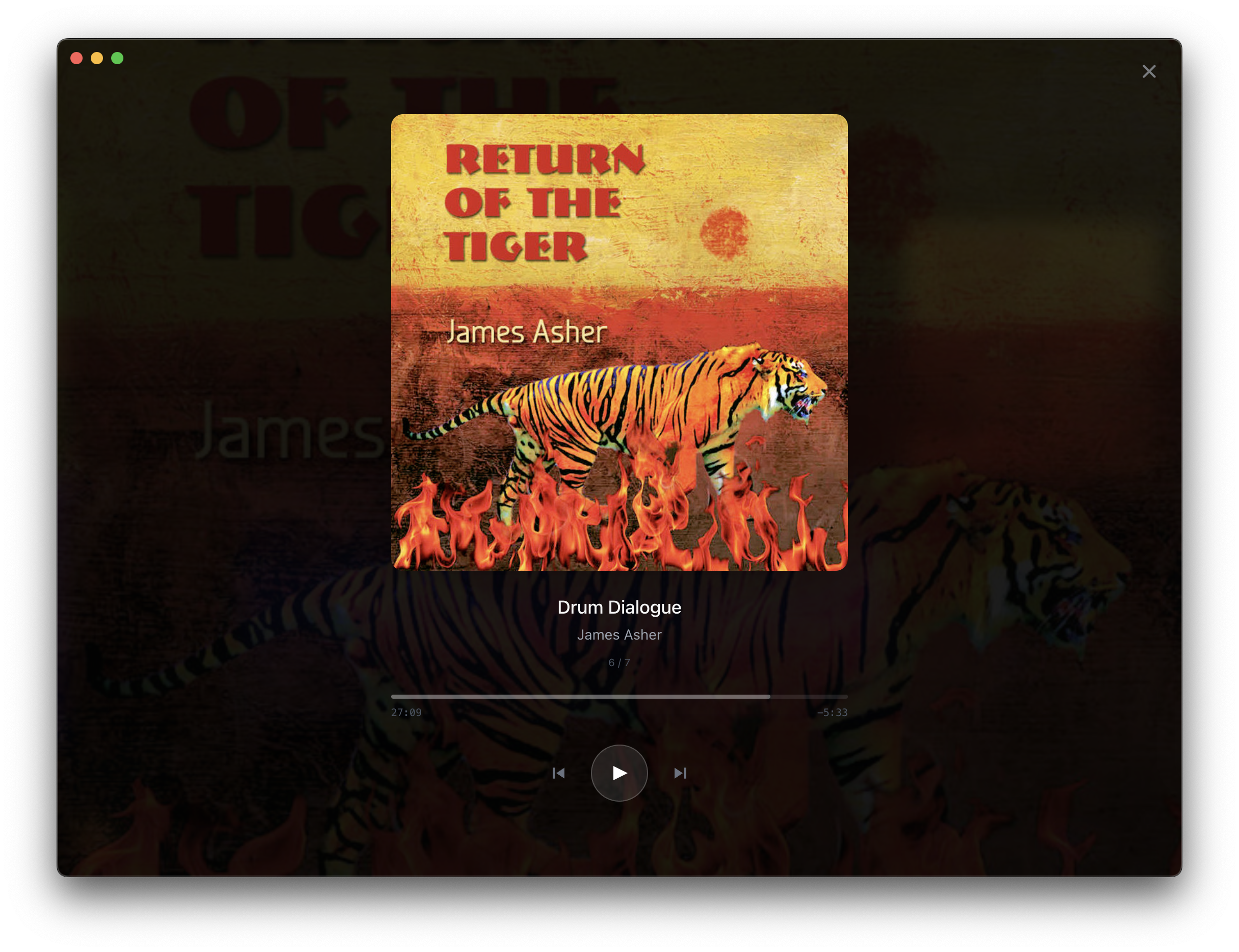
Limina Studio was created as a free resource for the Holotropic Breathwork community — a place to organise your local music library, explore your collection through the lens of the breathwork arc, and create playlists and sessions with greater ease.
That’s the problem Limina was created to solve.
We originally built two separate apps: Limina Library for organising a catalogue of music, and Limina Mix for arranging and exporting a finished set. They worked well, but there was still friction in the process. You’d export from one, import into the other, switch windows, and keep track of where everything lived.
So I decided to rethink the whole workflow.
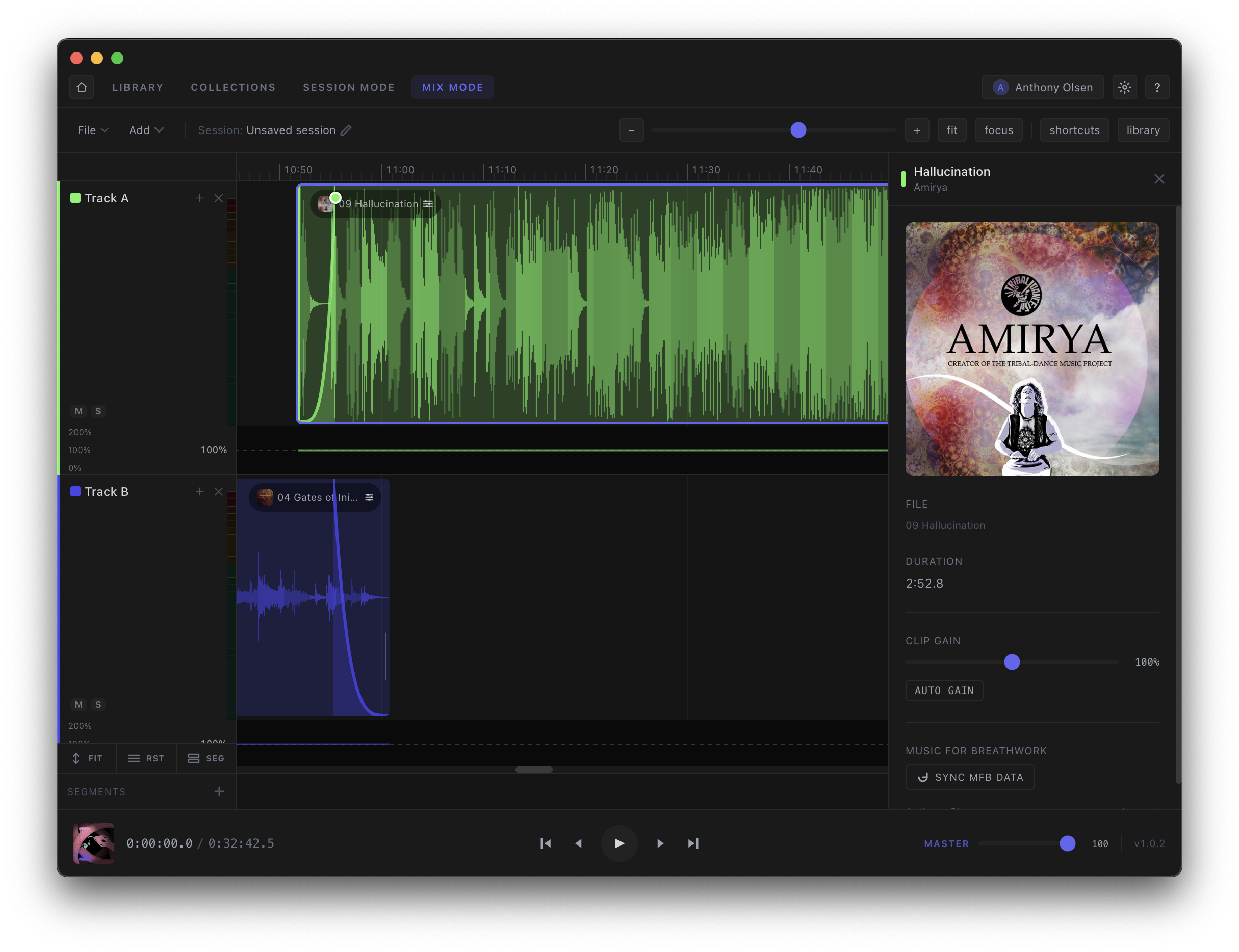
Limina Studio brings the entire process into a single free application, from the moment you import a folder of tracks through to a completed breathwork set, without having to leave the same workspace.
Music for Breathwork course will use Limina Studio
Limina Studio will also be the app that I will teach the upcoming Music for Breathwork course with. I wanted to create an app that would be relatively simple to use and could cover all the bases of organising, categorising and preparing local audio files to create a playlist for Breathwork workshops.
One app, four connected spaces
Limina Studio is organised into four spaces that flow into one another naturally. Your music, tags (synced via music for breathwork), playlists, and sessions are available everywhere, so you don’t have to think about moving files between tools.
Library — understanding what you already have
Point Limina at your music folders and it scans the supported audio files, organises them, and matches them against the Music for Breathwork catalogue. Tracks are automatically tagged by phase and colour-coded so you can immediately see where they might sit in the arc of a session: the call to adventure, jumpstart, first, second and third hour, the breakthrough, the release, and the return.
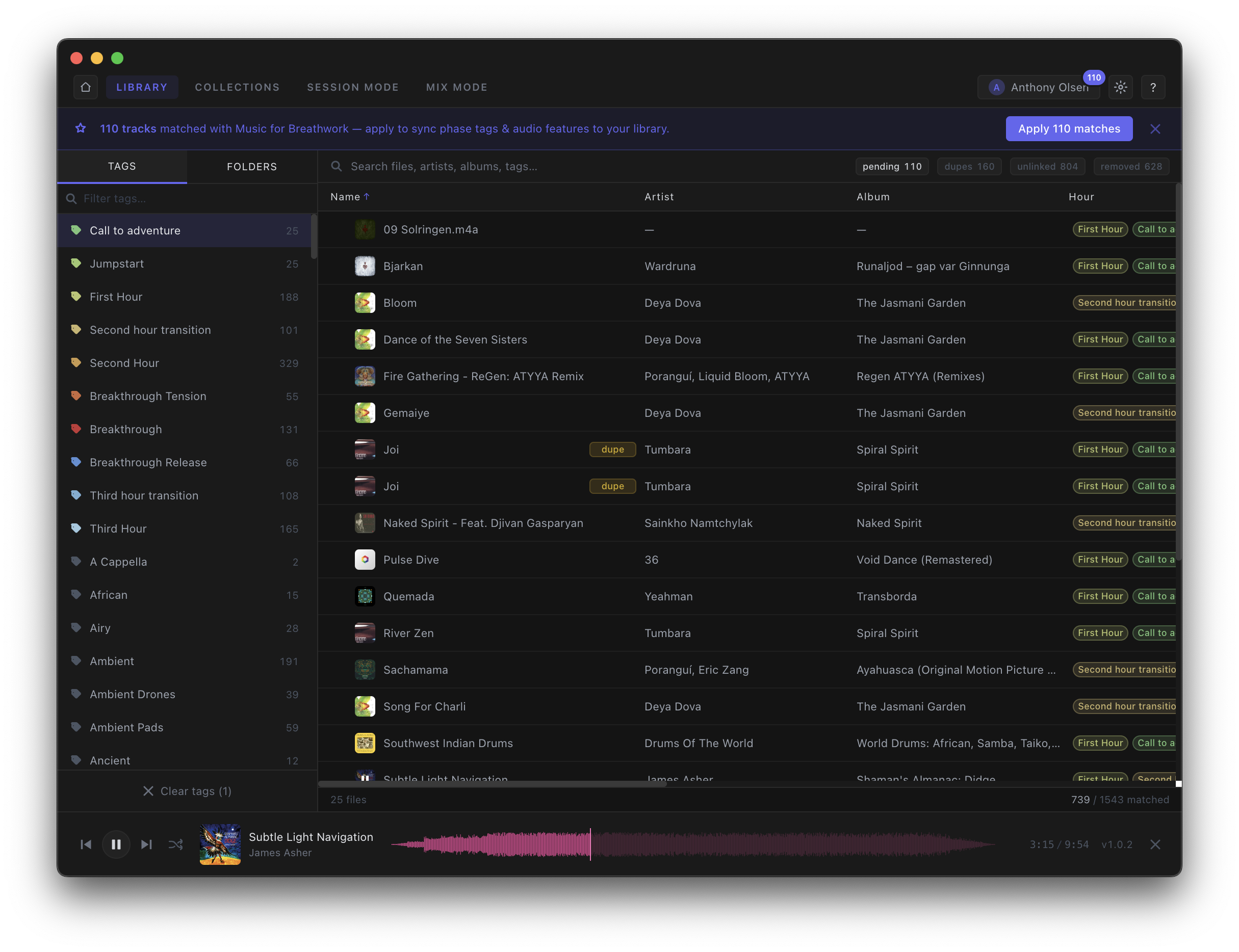
You can browse by phase, filter by musical qualities, preview tracks instantly, and get a clear picture of the catalogue you’ve built over years of facilitation. For many people, I think this will feel like the first time their collection has felt coherent rather than simply accumulated.
Collections — playlists, mixes, and session templates in one place
Your Music for Breathwork playlists sync directly into Limina Studio. Alongside them are your saved mixes, recorded sessions, and reusable templates. Everything lives in a single home base, and any item can be opened straight into a live session or the mixing timeline.
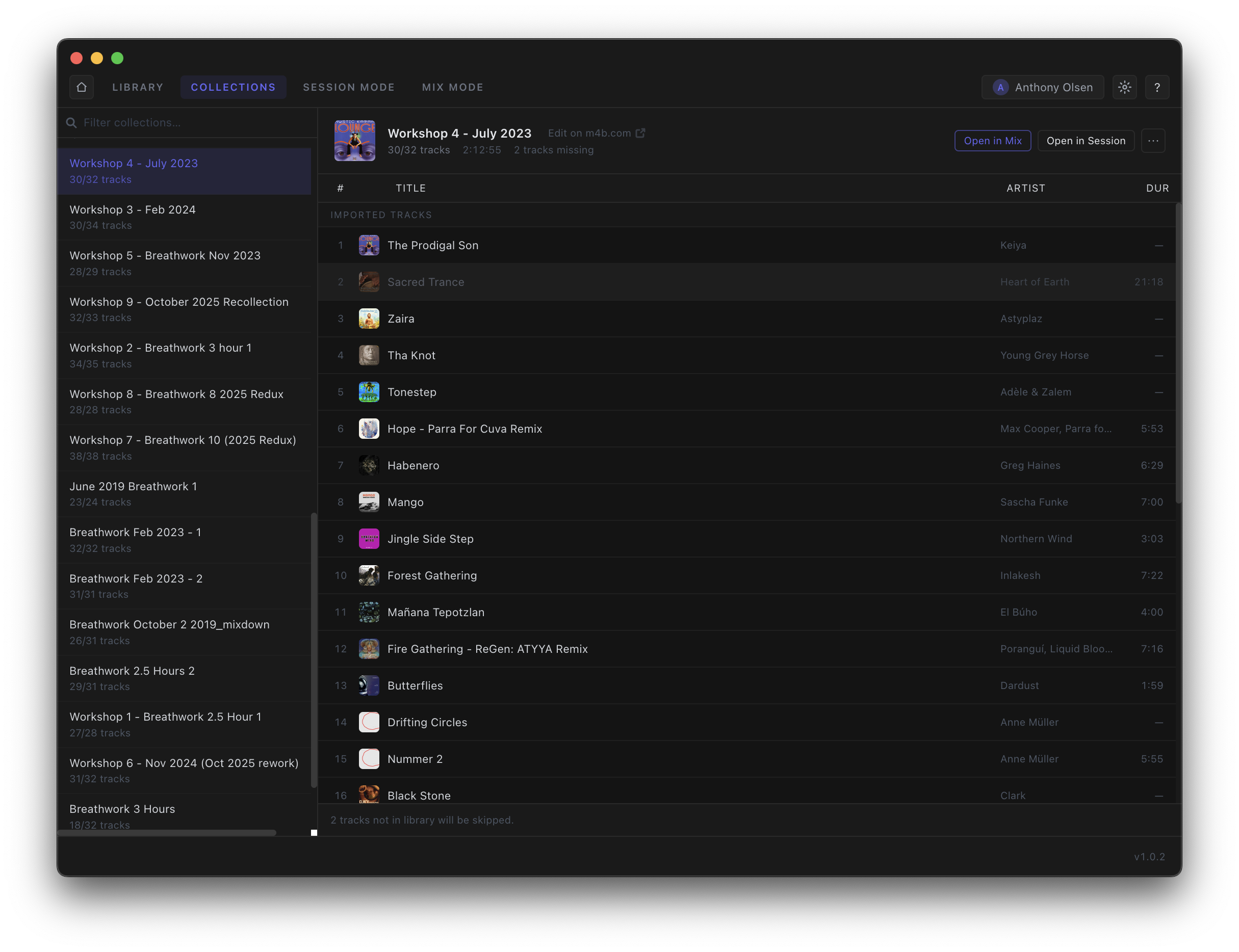
Session — facilitating with flexibility
This is the feature that feels most aligned with the reality of holding space for psychedelic therapists and non-Holotropic breathwork facilitators.
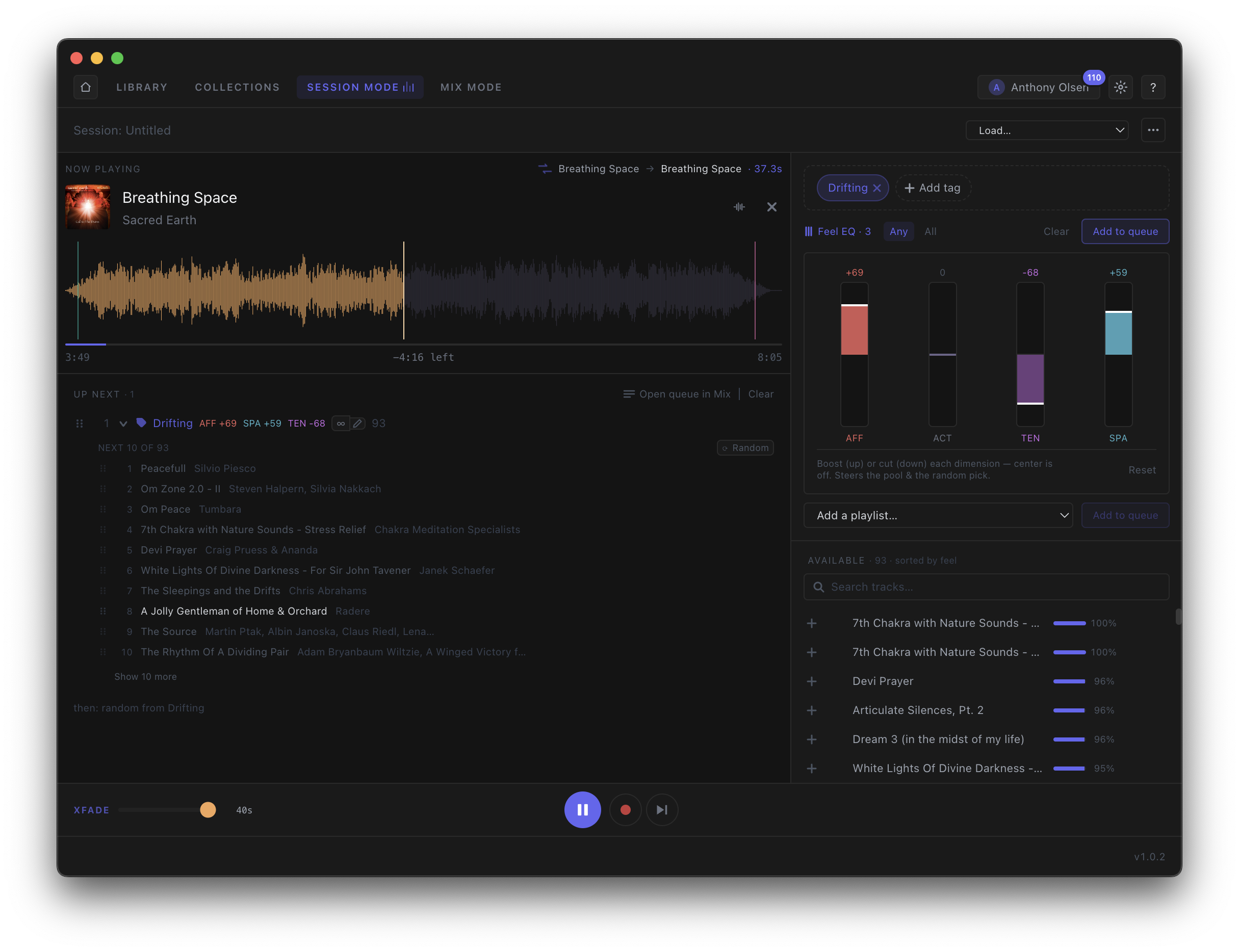
Session lets you play a set live with smooth automatic crossfades between tracks, but it doesn’t lock you into a rigid sequence. As the session unfolds, you can guide the musical direction using four simple controls: Affective, Activation, Tension, and Space (Feel EQ), or by tag or by both Feel EQ and tag.
You can record every session, which means an improvised set can later be replayed, saved as a template, or opened in Mix for further refinement. It bridges the gap between careful preparation and responsive facilitation.
Mix — shaping the final arc
When you want precise control as is the case for when you prepare a set for Holotropic Breathwork, Mix provides a full multitrack timeline. You can arrange tracks, create overlapping crossfades, and draw volume automation to sculpt the energy arc by hand. Once the set feels complete, export it as a single high-quality audio file together with a track-listing PDF for your workshop notes or records.
Designed around the actual breathwork process
What matters most to me is that Limina Studio wasn’t built as generic music software with a breathwork label added afterwards. The phase structure, the tagging system, the filters, and the Session controls all grew out of years of working with music in Holotropic Breathwork and other expanded-state settings.
The software understands the difference between music that opens a process, music that intensifies it, music that supports breakthrough, and music that helps people return and integrate. That understanding is embedded throughout the workflow.
If you’re already using Limina Library
You don’t need to start over.
The first time you open Limina Studio, it automatically imports your existing catalogue, including folders, matches, tags, and playlists. There’s no need to rebuild your library or re-scan your music. Everything appears exactly where you left it, with the additional Session and Collections spaces available immediately.
In other words, it’s the same catalogue you’ve already curated, now connected into a much more fluid workflow.
Free for the Holotropic Breathwork community
Limina Studio is free for facilitators and the broader Holotropic Breathwork community and is available for both Mac and Windows. A free Music for Breathwork account unlocks catalogue matching, including the phase tags and audio annotations that power the playlists on the website.
If you have a Music for Breathwork subscription you can sync you playlists from your Music for Breathwork account and view the tracks in the playlist in the Collections workspace. A handy feature is that if the track doesn't exist in your local library there are links for most tracks directing you to where you can purchase the music from.
If you prepare music for breathwork, psychedelic-assisted therapy, or other expanded-state work, this is the tool I kept wishing existed while putting together sets for workshops and trainings over the years.