The first hour of a Holotropic Breathwork set is foundational. It lays the ground for everything that is about to unfold, and the music chosen for this phase carries a specific intention: to build momentum, support the entrainment of breath and mind, and begin catalysing the breathwork experience.
Rather than simply accompanying the breather, the music of the first hour actively helps them cross the threshold from ordinary awareness into the expanded state the practice invites.

Activating Intensity
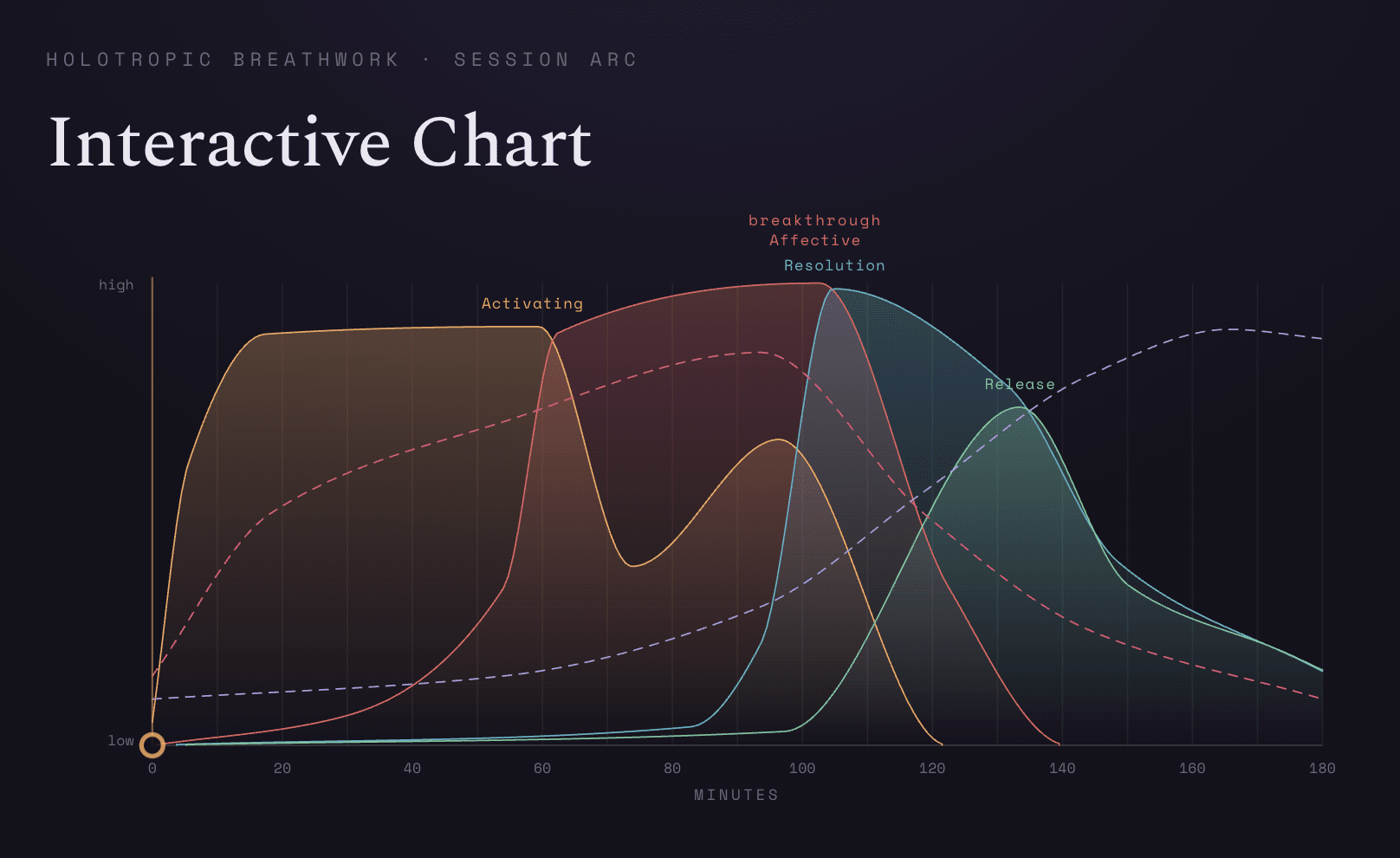
The quality of the first hour is primarily one of activating intensity. The music here is chosen for its ability to drive, energise, and propel, building rhythmic and emotional momentum that carries the breather deeper into the experience. This is distinct from the affective intensity of the second hour, where the music shifts away from activation and toward emotional depth, tenderness, and spaciousness. Both hours are intense, but in different ways and in service of different needs.
Remember the illustration of the cycles between activating, affective intensities, resolution and release. The first hour is all about activating energy.

Not without risk is all about activation
A very typical track from Byron Metcalf which is well suited to the first hour of a Holotropic Breathwork session. Dense wall of sound with relentless rhythms.
Interactive Analysis
First Phase stages
This hour can be understood in four broad phases, with an optional fifth:
1. Call to Adventure
The opening of the set signals to the breather that something significant is beginning. The music here carries a sense of invitation and possibility, gently drawing the breather away from the everyday and toward the inner landscape they are about to explore.

2. Jumpstart
As the breath deepens and the body begins to respond, the music shifts to actively ignite the process. Energy, rhythm, and intensity begin to emerge, meeting the breather where they are and helping to accelerate their entry into the experience.
3. Maintaining Momentum
Once the jumpstart has done its work, the task becomes sustaining what has been set in motion. The music continues to drive the experience forward, holding the breather in a state of engagement and ensuring the process has the energy it needs to deepen and unfold.

3a. Creating Space (Optional)
Before moving into the transition, there may be moments where it feels right to allow a little more room in the music, a brief easing of intensity that gives the breather space to process and settle before the next phase begins. This is not a withdrawal of support, but a gentle opening within the momentum rather than a break from it.
4. Second Hour Transition
As the first hour draws to a close, the music begins to shift in preparation for what comes next. This is a liminal passage, a moment of bridging between the activating intensity of the first hour and the different, more affective quality of presence that the second hour calls for.
